Services
UI UX Design
Client
Shazam
Year
2025
Team
Solo
Info
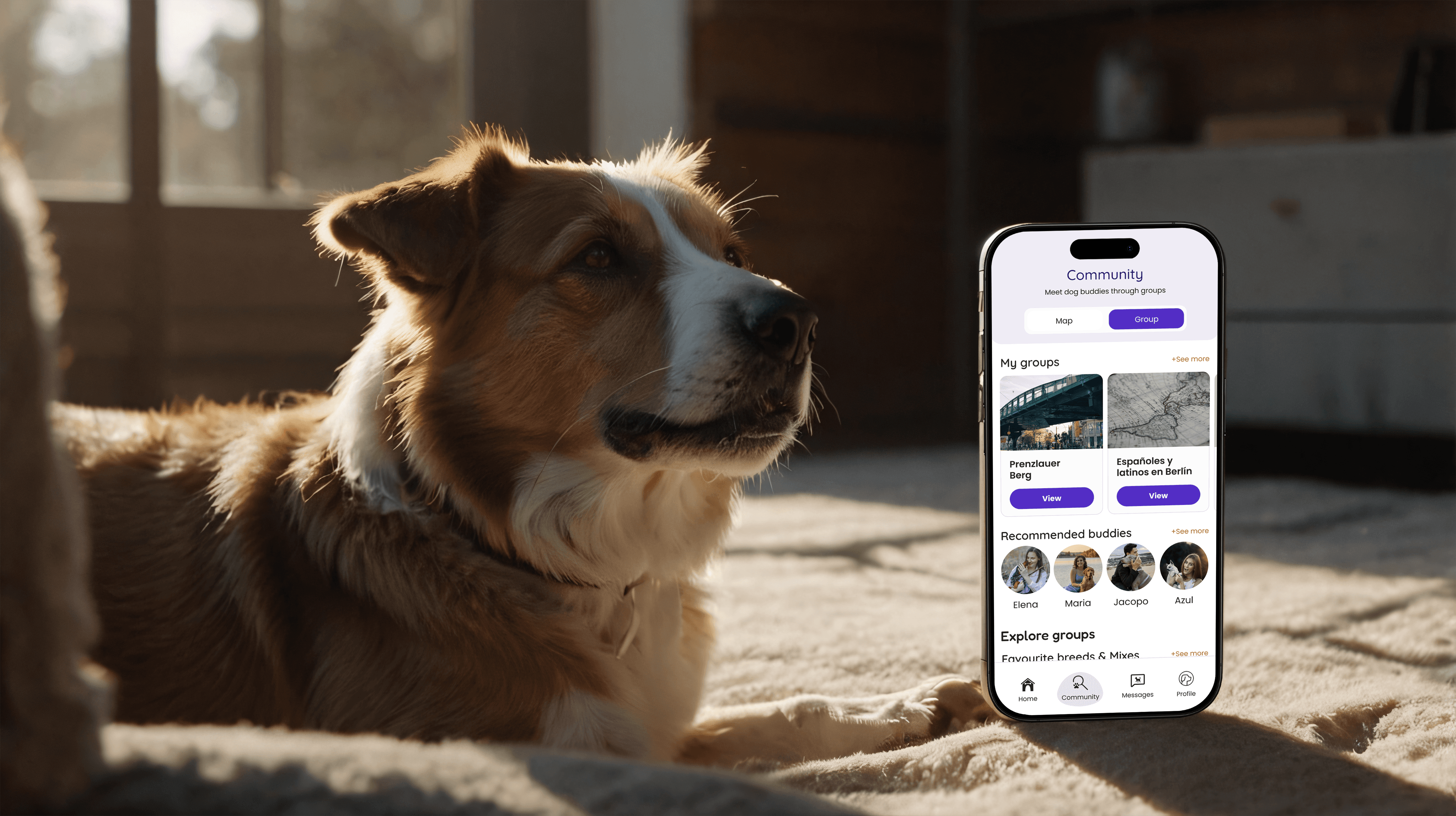
Kristin Gissberg is the founder of Take a Pawse, a Berlin-based non-profit that connects mental health support with animal interaction. With Pawse Together, her vision is to create a digital, community-driven platform built on trust and meaningful connections.
Pawse Together
Pawse Together
Lorem ispum
Lorem ispum
Services
UX/UI Design
Client
Take a Pawse
Year
2025
Team
Anna Sevaistre
Camila da Fonseca
Javiera Contreras
Info
Kristin Gissberg is the founder of Take a Pawse, a Berlin-based non-profit that connects mental health support with animal interaction. With Pawse Together, her vision is to create a digital, community-driven platform built on trust and meaningful connections.
Services
UI UX Design
Year
2025
Client
Take a Pawse
Team
Solo
Info
Kristin Gissberg is the founder of Take a Pawse, a Berlin-based non-profit that connects mental health support with animal interaction. With Pawse Together, her vision is to create a digital, community-driven platform built on trust and meaningful connections.
The brief
The challenge is to design a digital platform, that connects dog owners with trusted dog lovers. Aiming to build a safe, reliable, and community-driven dog sharing service, using a membership model to ensure trust, safety, and value for both sides.
This redesign exercise was originally proposed by Ironhack, and I decided to challenge myself by adding a twist: I filled a wheel with popular apps, gave it a spin, and fate chose Shazam.
The challenge is to design a digital platform, that connects dog owners with trusted dog lovers. Aiming to build a safe, reliable, and community-driven dog sharing service, using a membership model to ensure trust, safety, and value for both sides.
Stakeholder interview
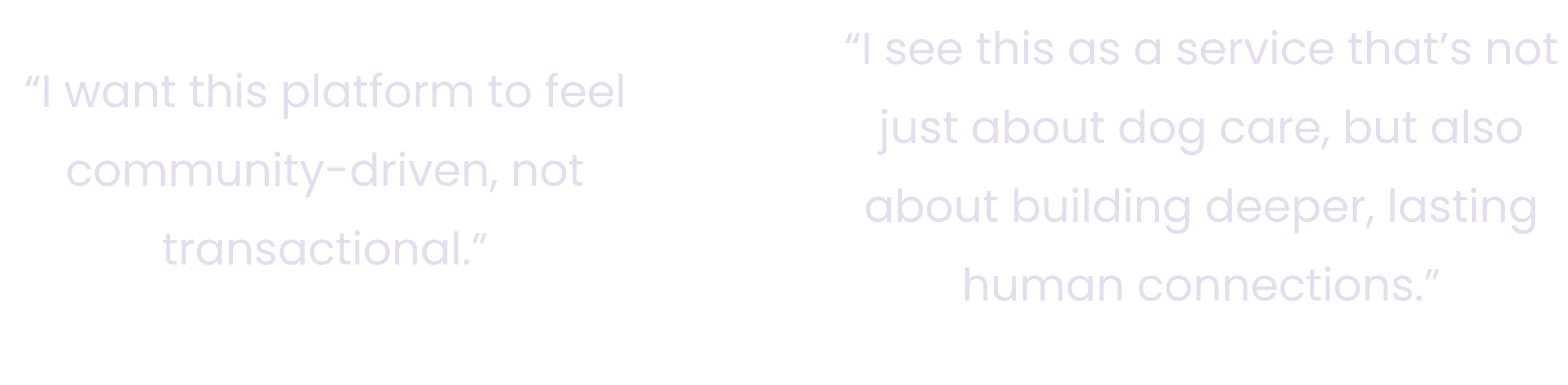
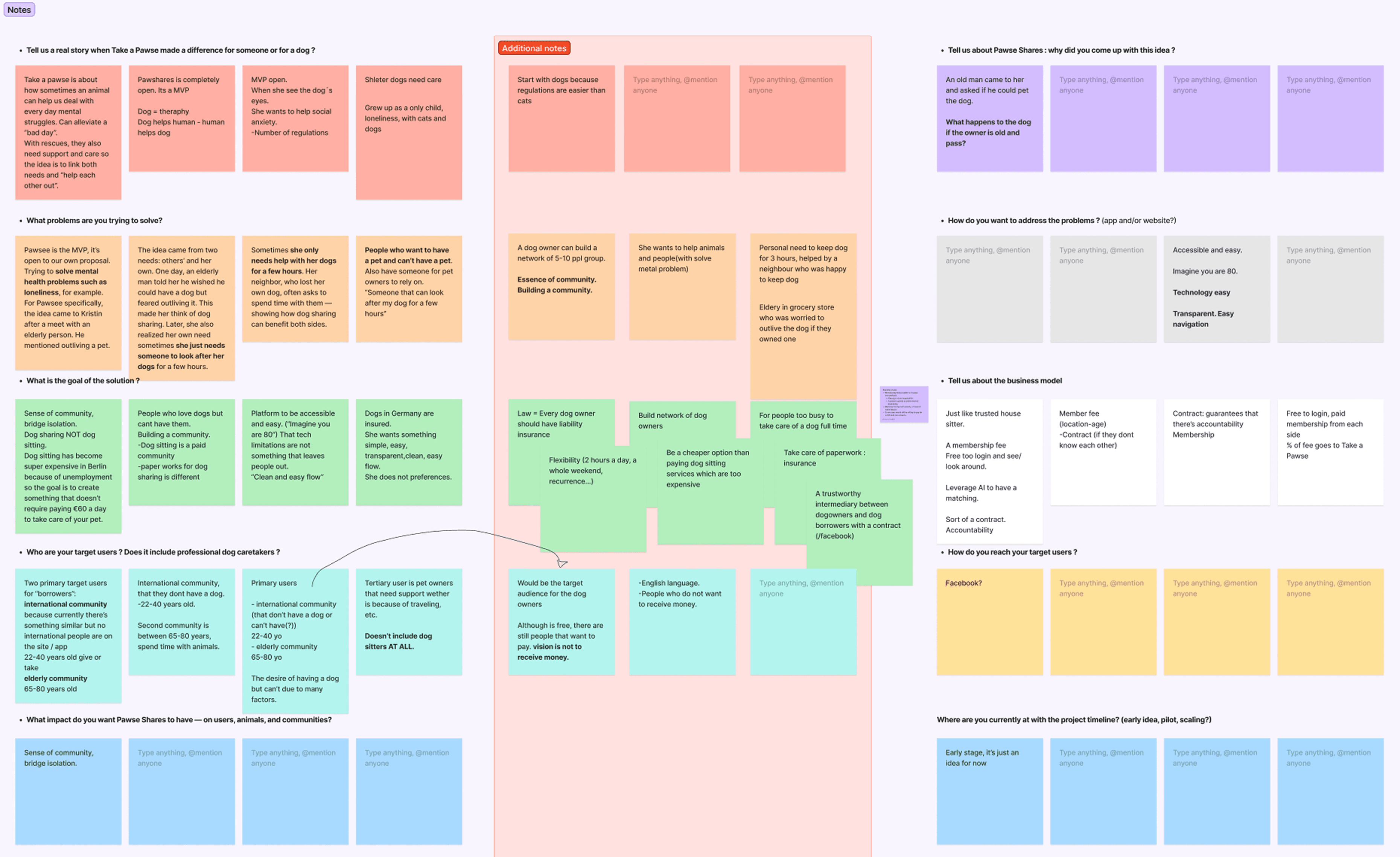
To uncover the heart of the problem, we conducted a stakeholder interview with Pawse Together’s founder. The conversation revealed a clear emotional and strategic direction for the platform:
The goal wasn’t just to create another pet care service — it was to build a community rooted in trust and empathy.
Users should feel connected and supported, not like participants in a transaction.
To uncover the heart of the problem, we conducted a stakeholder interview with Pawse Together’s founder. The conversation revealed a clear emotional and strategic direction for the platform:
The goal wasn’t just to create another pet care service — it was to build a community rooted in trust and empathy.
Users should feel connected and supported, not like participants in a transaction.
QUANTITATIVE RESEARCH
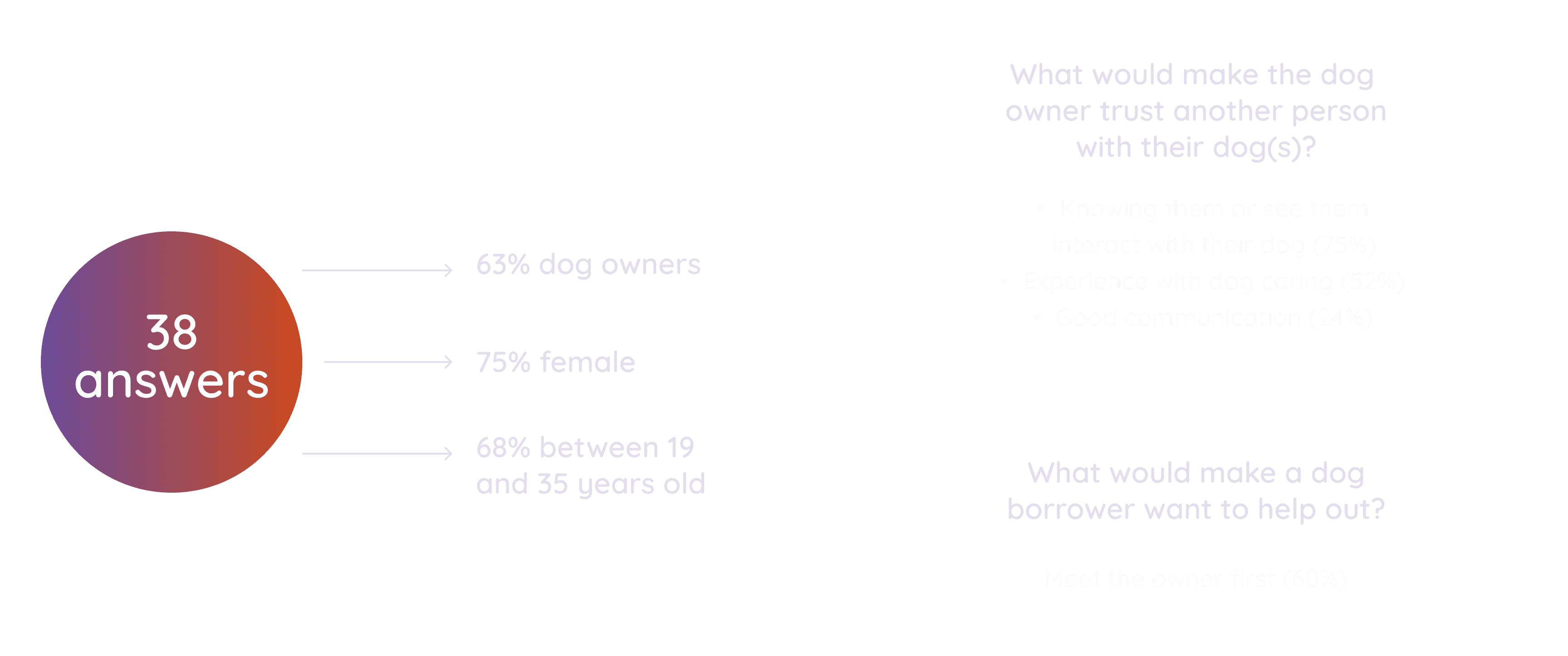
We collected 38 survey responses from dog owners and potential borrowers to understand their motivations and trust factors.
Most respondents were women aged 25–35, and 65% were dog owners. Owners said they’d trust someone they knew personally or had seen interact with their dog. Borrowers were motivated by the chance to connect with owners and spend time with dogs.
These findings highlighted that trust and connection are key drivers for both groups.
We collected 38 survey responses from dog owners and potential borrowers to understand their motivations and trust factors.
Most respondents were women aged 25–35, and 65% were dog owners. Owners said they’d trust someone they knew personally or had seen interact with their dog. Borrowers were motivated by the chance to connect with owners and spend time with dogs.
These findings highlighted that trust and connection are key drivers for both groups.
Qualitative RESEARCH
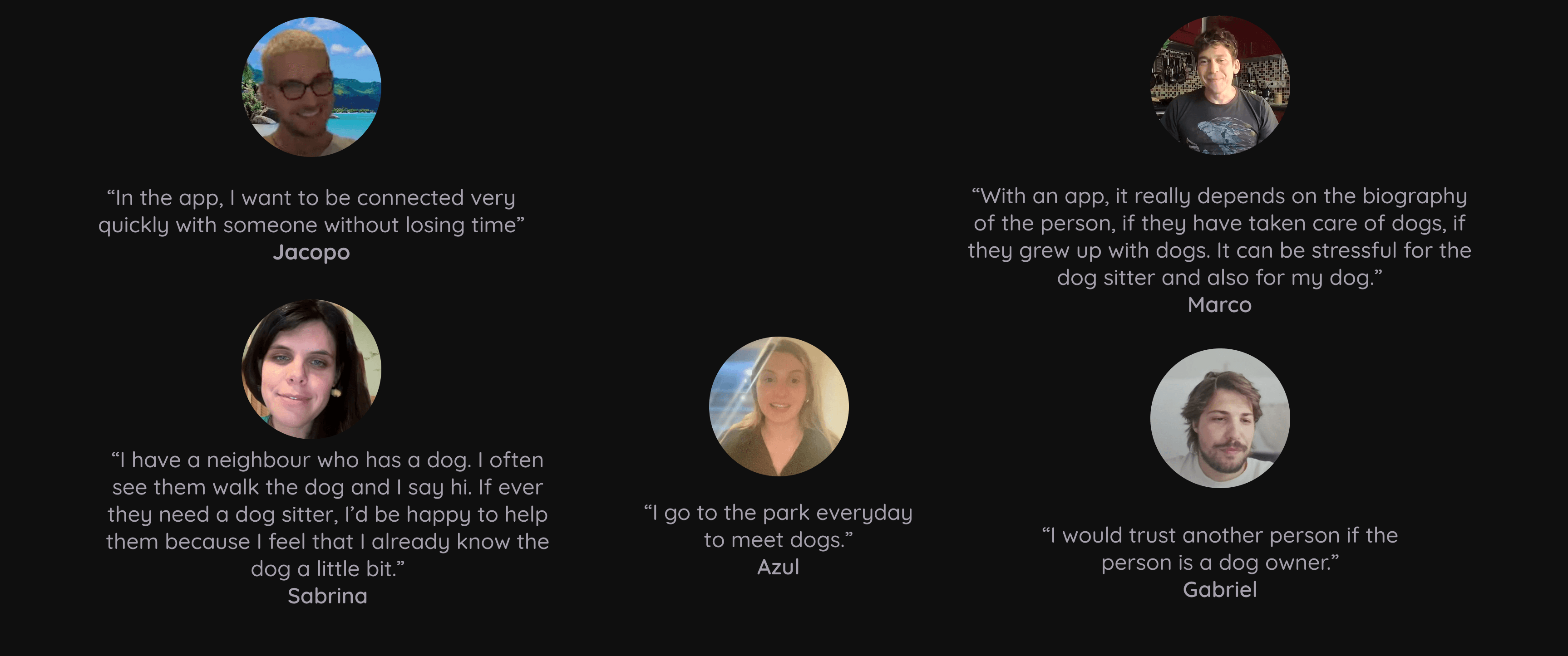
We conducted five user interviews with both dog owners and dog lovers to explore how trust and connection form between them. Participants emphasized the importance of familiarity, shared experiences, and empathy.
As Sabrina shared, “I have a neighbour who has a dog. I often see them walk the dog and I say hi. If ever they need a dog sitter, I’d be happy to help because I feel that I already know the dog a little bit.”
These conversations reinforced that personal connection and mutual trust are key to making the Pawse Together experience feel natural and safe.
We conducted five user interviews with both dog owners and dog lovers to explore how trust and connection form between them. Participants emphasized the importance of familiarity, shared experiences, and empathy.
As Sabrina shared, “I have a neighbour who has a dog. I often see them walk the dog and I say hi. If ever they need a dog sitter, I’d be happy to help because I feel that I already know the dog a little bit.”
These conversations reinforced that personal connection and mutual trust are key to making the Pawse Together experience feel natural and safe.
Primary User persona
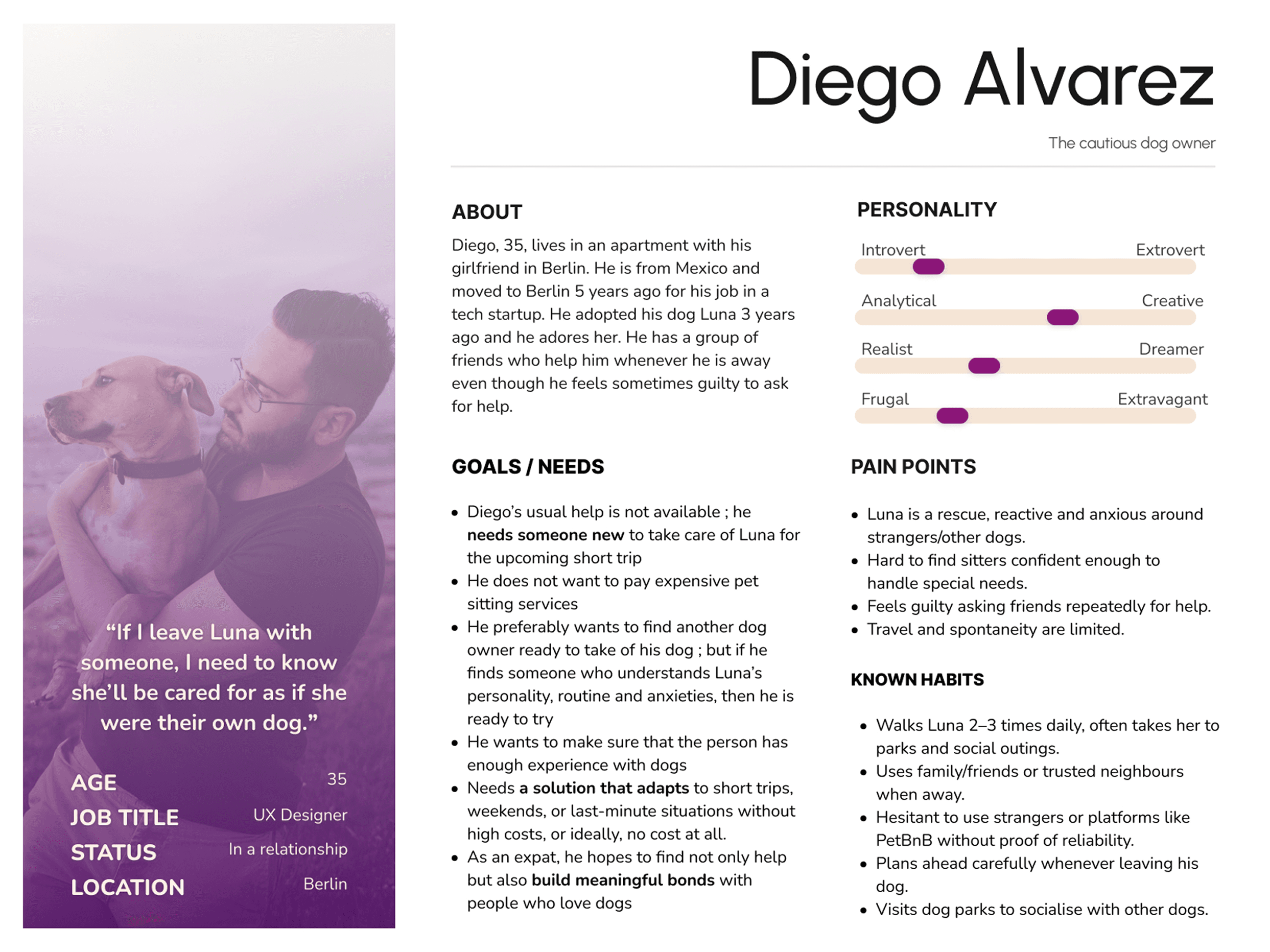
From our research, we created Diego Alvarez, our primary user persona. Diego represents cautious and caring dog owners who value trust, empathy, and genuine connection when seeking help for their pets.
A 35-year-old UX designer living in Berlin, Diego adores his rescue dog, Luna, and wants to ensure she’s cared for by someone who understands her personality and needs. While he has friends who occasionally help, he often feels guilty asking for favors and finds paid services too impersonal or costly.
Diego’s story reflects a broader insight — dog owners are not just looking for convenience; they’re looking for reliability and emotional reassurance. His needs became a key reference point for designing an experience that feels safe, personal, and community-driven.
From our research, we created Diego Alvarez, our primary user persona. Diego represents cautious and caring dog owners who value trust, empathy, and genuine connection when seeking help for their pets.
A 35-year-old UX designer living in Berlin, Diego adores his rescue dog, Luna, and wants to ensure she’s cared for by someone who understands her personality and needs. While he has friends who occasionally help, he often feels guilty asking for favors and finds paid services too impersonal or costly.
Diego’s story reflects a broader insight — dog owners are not just looking for convenience; they’re looking for reliability and emotional reassurance. His needs became a key reference point for designing an experience that feels safe, personal, and community-driven.
Primary User journey
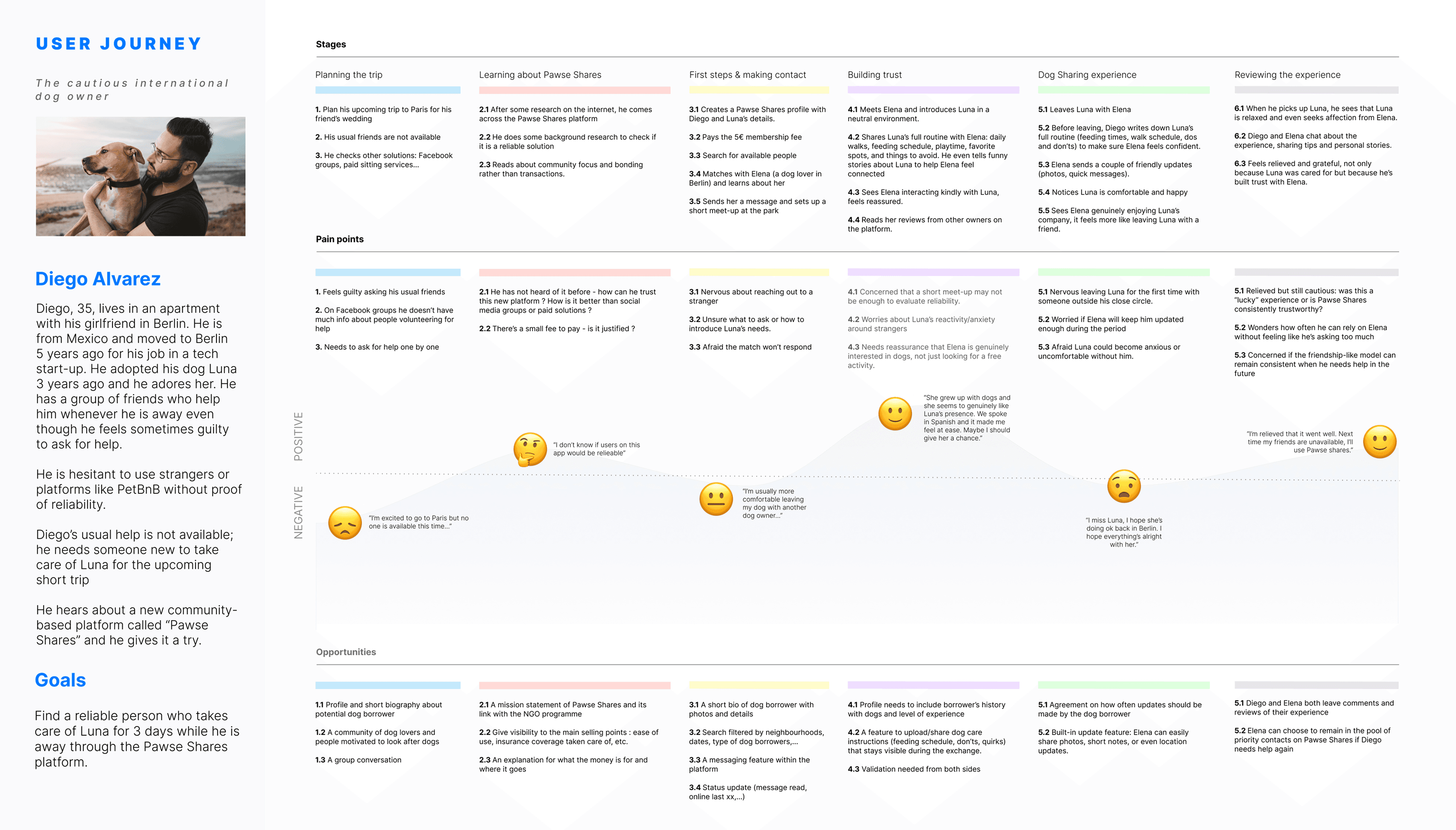
To better visualize Diego’s experience, we mapped his journey from planning a trip to reviewing his dog-sharing experience on Pawse Together. The journey revealed both emotional highs and points of hesitation — from the initial uncertainty of trusting a new platform to the relief of finding someone who genuinely cares for Luna.
Key pain points included difficulty trusting strangers, guilt asking friends for help, and limited visibility into potential sitters’ reliability. However, moments of delight emerged when Diego felt reassured by authentic interactions, clear communication, and community-driven support.
This journey map helped us identify key opportunities to build trust through transparency, strengthen community features, and create smoother onboarding for first-time users like Diego.
To better visualize Diego’s experience, we mapped his journey from planning a trip to reviewing his dog-sharing experience on Pawse Together. The journey revealed both emotional highs and points of hesitation — from the initial uncertainty of trusting a new platform to the relief of finding someone who genuinely cares for Luna.
Key pain points included difficulty trusting strangers, guilt asking friends for help, and limited visibility into potential sitters’ reliability. However, moments of delight emerged when Diego felt reassured by authentic interactions, clear communication, and community-driven support.
This journey map helped us identify key opportunities to build trust through transparency, strengthen community features, and create smoother onboarding for first-time users like Diego.
Secondary user persona/journey
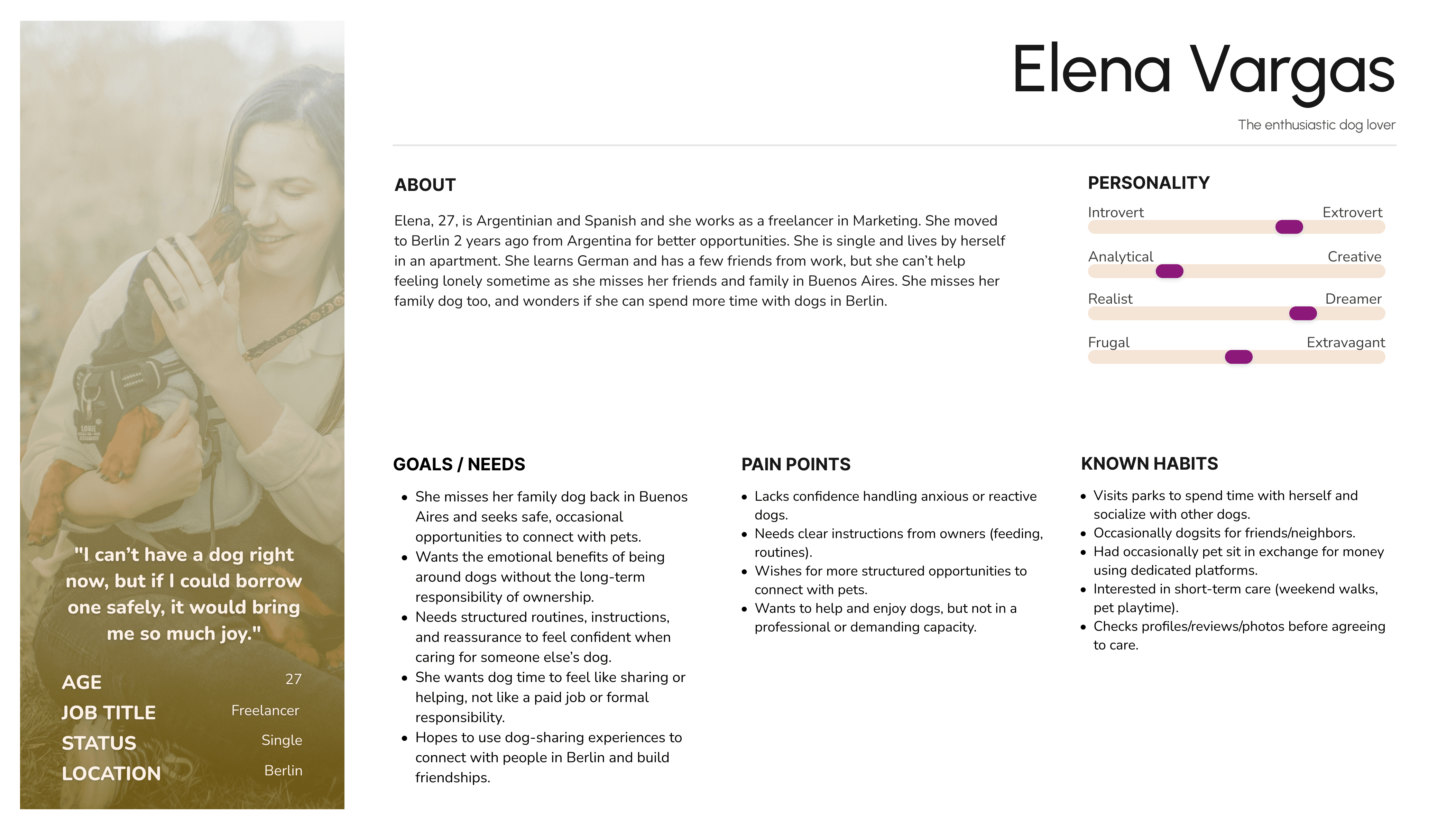
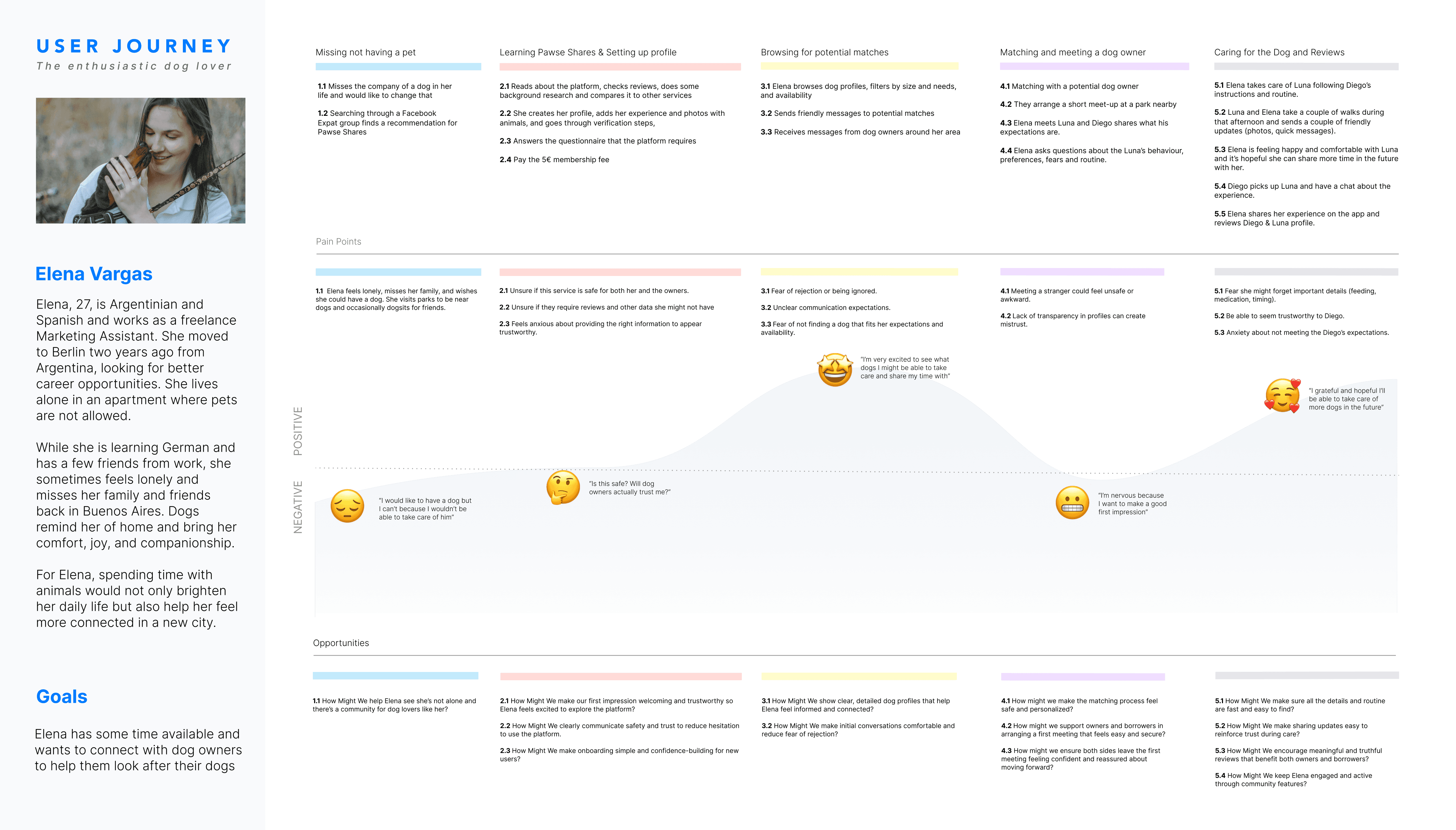
To complement Diego’s perspective, we defined a secondary user persona.
Elena Vargas, representing empathetic dog lovers who don’t own a pet but want to share care and companionship. Her journey helped us better understand the other side of the experience, revealing how motivation, trust, and emotional connection shape interactions between owners and borrowers. This dual perspective allowed us to design a more balanced and meaningful ecosystem within Pawse Together.
To complement Diego’s perspective, we defined a secondary user persona.
Elena Vargas, representing empathetic dog lovers who don’t own a pet but want to share care and companionship. Her journey helped us better understand the other side of the experience, revealing how motivation, trust, and emotional connection shape interactions between owners and borrowers. This dual perspective allowed us to design a more balanced and meaningful ecosystem within Pawse Together.
Problem statement
Cautious dog owners need to find a way to connect with dog lovers because they need additional and reliable support for their dogs.
Cautious dog owners need to find a way to connect with dog lovers because they need additional and reliable support for their dogs.
Cautious dog owners need to find a way to connect with dog lovers because they need additional and reliable support for their dogs.
MVP
The goal, at the bare minimum, is to connect dog owners with trusted individuals creating a safe, reliable, and community-driven dog-sharing experience.
At its most basic, the MVP includes:
User profiles with bios (for dog owners and dog lovers) and recommendations
Dog profiles and bios with their routines and needs
Simple search
Membership fee payment and subscription to insurance
Direct messaging to coordinate meet-ups
The goal, at the bare minimum, is to connect dog owners with trusted individuals creating a safe, reliable, and community-driven dog-sharing experience.
At its most basic, the MVP includes:
User profiles with bios (for dog owners and dog lovers) and recommendations
Dog profiles and bios with their routines and needs
Simple search
Membership fee payment and subscription to insurance
Direct messaging to coordinate meet-ups
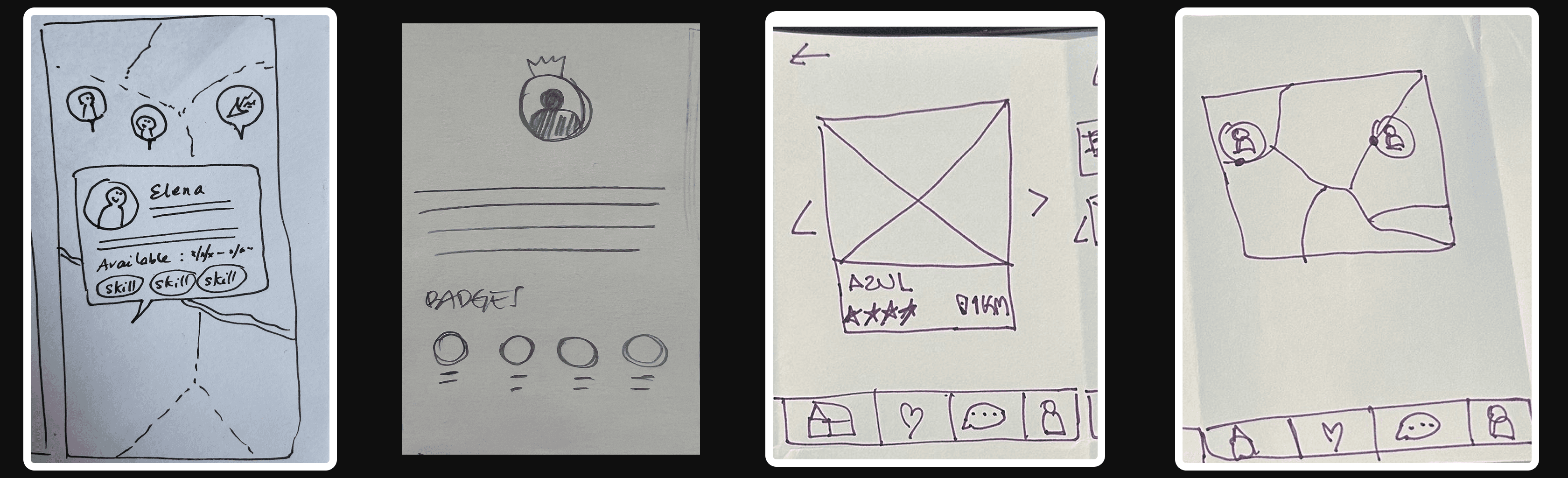
initial sketches
During the ideation phase, we began translating our insights into quick low-fidelity sketches to explore early interaction ideas. These initial drawings helped us visualize key user flows such as profile creation, browsing nearby dog owners or borrowers, and building trust through shared profiles and badges.
Working on paper allowed us to iterate rapidly, focus on layout and hierarchy, and experiment with features that would make Pawse Together feel intuitive, warm, and community-driven before moving into digital wireframes.
During the ideation phase, we began translating our insights into quick low-fidelity sketches to explore early interaction ideas. These initial drawings helped us visualize key user flows such as profile creation, browsing nearby dog owners or borrowers, and building trust through shared profiles and badges.
Working on paper allowed us to iterate rapidly, focus on layout and hierarchy, and experiment with features that would make Pawse Together feel intuitive, warm, and community-driven before moving into digital wireframes.
Low fidelity wireframes
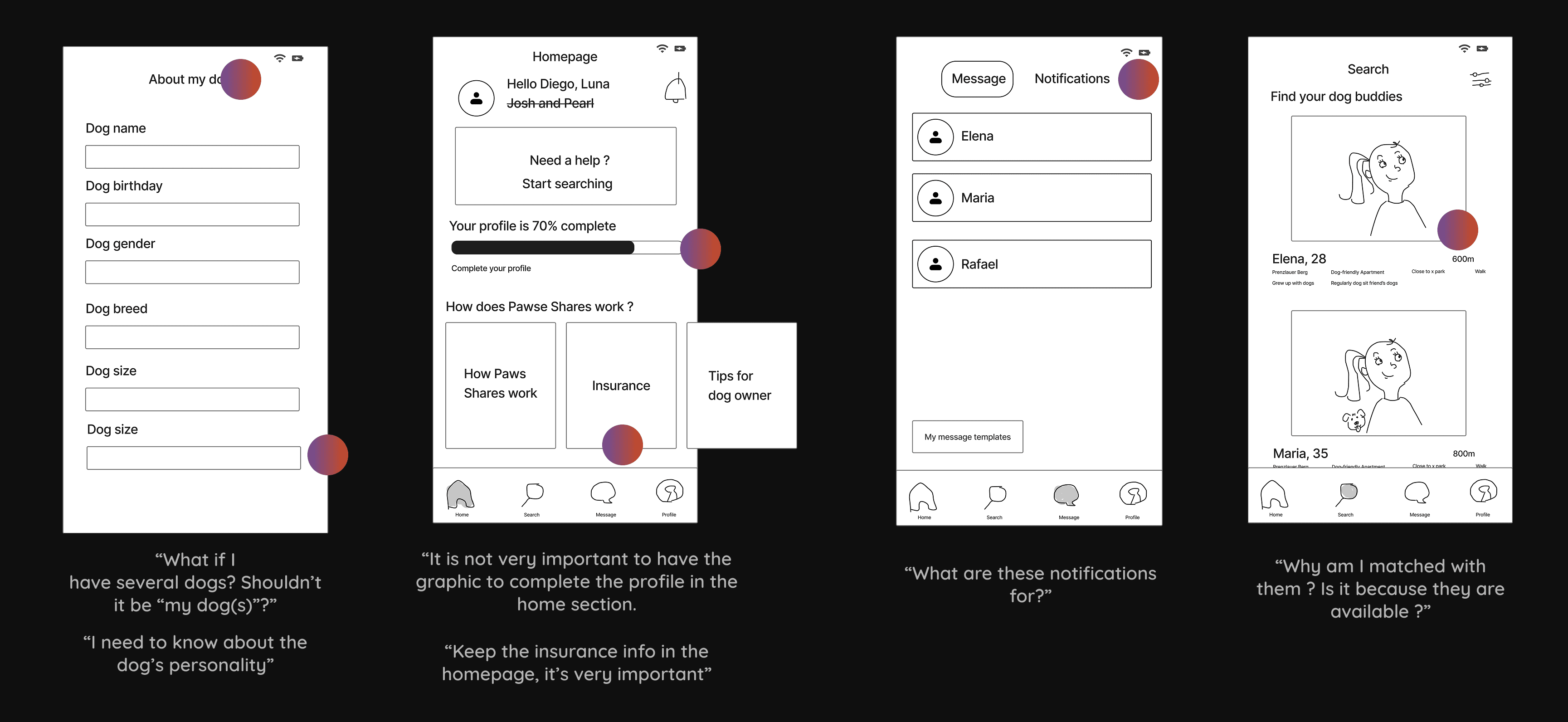
We translated our early sketches into low-fidelity wireframes to start testing the core user flows and information hierarchy. This stage allowed us to validate essential features such as profile setup, browsing matches, and messaging.
Through quick feedback sessions, users highlighted the need for clearer context in notifications, better understanding of match criteria, and the ability to add multiple dogs. These insights guided the next iteration, helping us refine the experience around clarity, relevance, and trust before moving to higher-fidelity designs.
We translated our early sketches into low-fidelity wireframes to start testing the core user flows and information hierarchy. This stage allowed us to validate essential features such as profile setup, browsing matches, and messaging.
Through quick feedback sessions, users highlighted the need for clearer context in notifications, better understanding of match criteria, and the ability to add multiple dogs. These insights guided the next iteration, helping us refine the experience around clarity, relevance, and trust before moving to higher-fidelity designs.
Mid fidelity wireframes
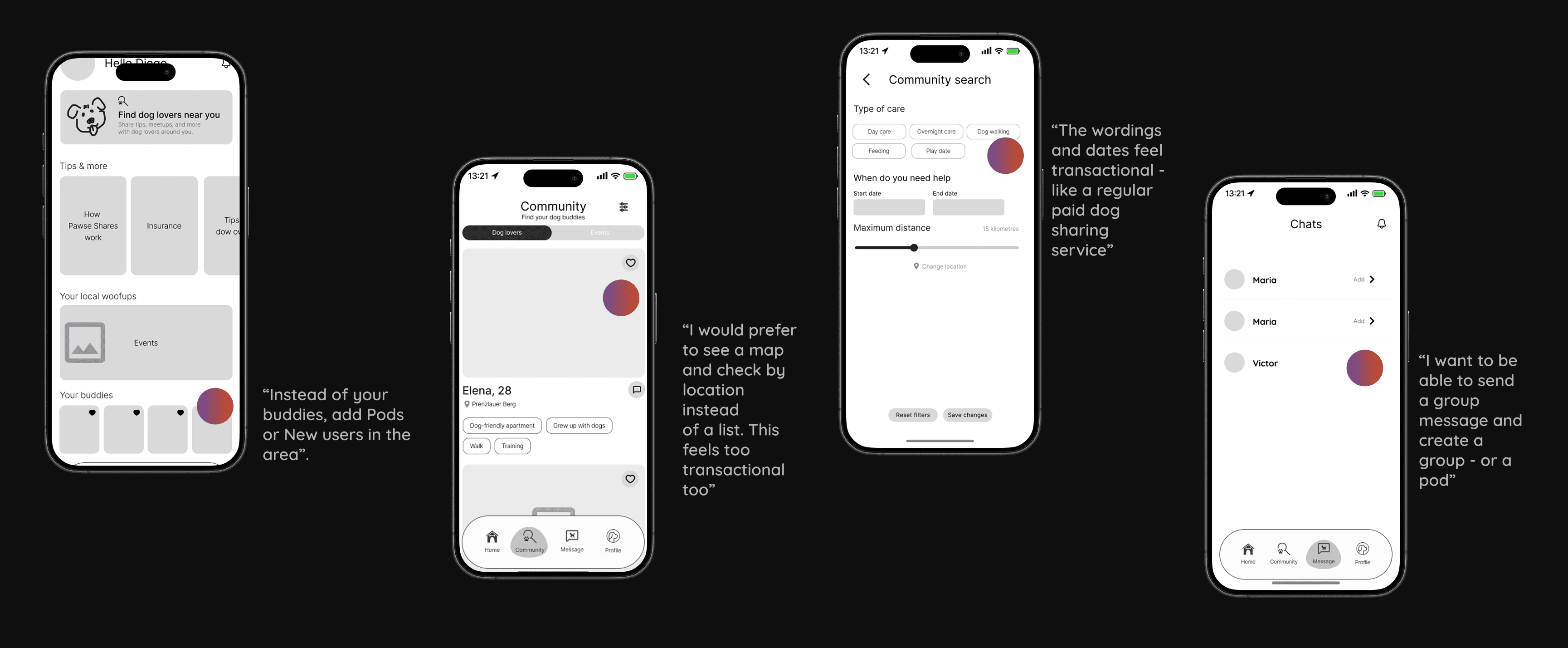
After validating the basic flow, we moved into mid-fidelity wireframes to refine structure, layout, and interactions. At this stage, our focus was on making the experience feel less transactional and more community-oriented.
User feedback led us to introduce “Pods” — small local groups of dog owners and borrowers — and to rework the language for a warmer, more social tone. We also added features like group messaging and location-based search to make connecting feel natural and personal.
These iterations helped bridge functionality with emotion, ensuring Pawse Together reflected the sense of trust and belonging at the heart of the concept.
After validating the basic flow, we moved into mid-fidelity wireframes to refine structure, layout, and interactions. At this stage, our focus was on making the experience feel less transactional and more community-oriented.
User feedback led us to introduce “Pods” — small local groups of dog owners and borrowers — and to rework the language for a warmer, more social tone. We also added features like group messaging and location-based search to make connecting feel natural and personal.
These iterations helped bridge functionality with emotion, ensuring Pawse Together reflected the sense of trust and belonging at the heart of the concept.
VISUAL COMPETITIVE ANALYSIS
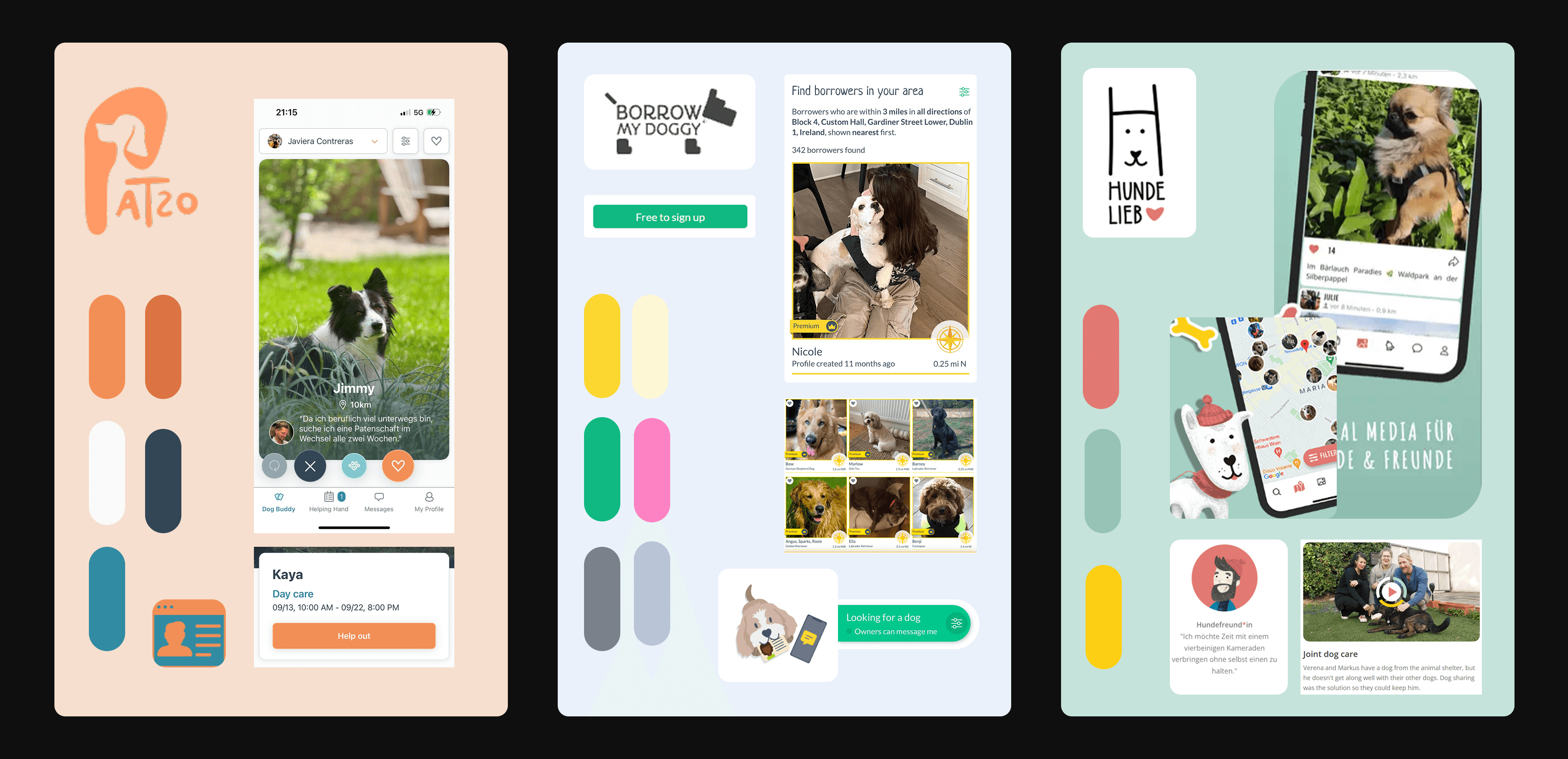
To define Pawse Together’s visual direction, we conducted a competitive analysis of similar dog-sharing and pet community platforms. We reviewed three key competitors — Patzo, BorrowMyDoggy, and Hunde Lieb — focusing on how visual language shapes user perception.
Patzo’s clean, service-oriented look felt too transactional, while BorrowMyDoggy inspired us with its friendly professionalism. However, Hunde Lieb stood out most for its community-driven tone, soft color palette, and playful rounded elements. These visual qualities aligned perfectly with our goal of creating an interface that feels warm, trustworthy, and inclusive — a true reflection of the Pawse Together spirit.
To define Pawse Together’s visual direction, we conducted a competitive analysis of similar dog-sharing and pet community platforms. We reviewed three key competitors — Patzo, BorrowMyDoggy, and Hunde Lieb — focusing on how visual language shapes user perception.
Patzo’s clean, service-oriented look felt too transactional, while BorrowMyDoggy inspired us with its friendly professionalism. However, Hunde Lieb stood out most for its community-driven tone, soft color palette, and playful rounded elements. These visual qualities aligned perfectly with our goal of creating an interface that feels warm, trustworthy, and inclusive — a true reflection of the Pawse Together spirit.
Moodboard
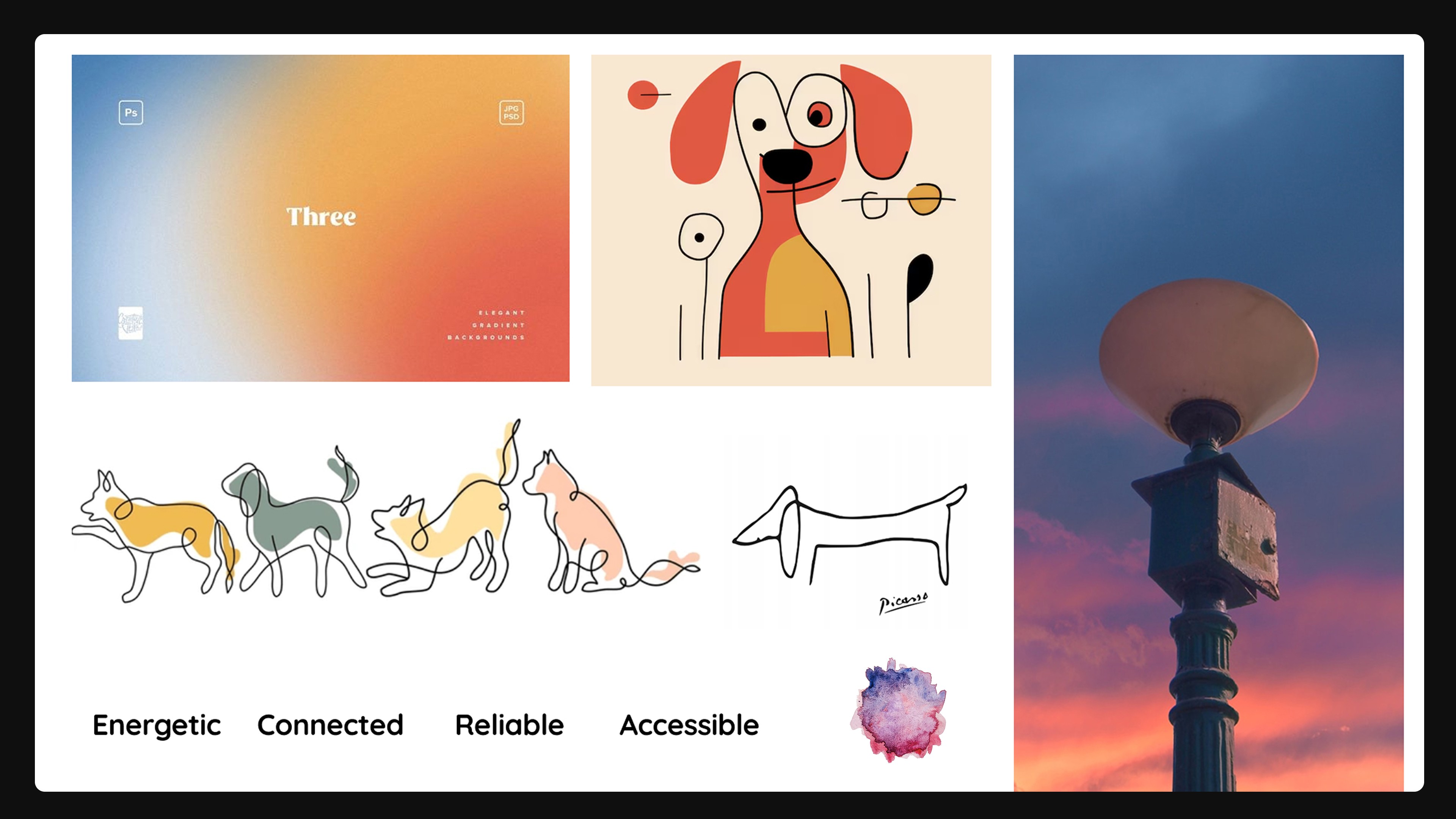
Our moodboard set the visual foundation for Pawse Together, focusing on creating an identity that feels energetic, connected, reliable, and accessible. We drew inspiration from Take a Pawse’s abstract graphic style, combining simple dog illustrations with a soft aquarel color palette to evoke trust and warmth.
To balance playfulness with sophistication, we introduced orange accents for energy and an elevated purple tone to convey reliability and calm. Together, these elements express Pawse Together’s spirit — a space that’s friendly and joyful, yet grounded in empathy and connection.
Our moodboard set the visual foundation for Pawse Together, focusing on creating an identity that feels energetic, connected, reliable, and accessible. We drew inspiration from Take a Pawse’s abstract graphic style, combining simple dog illustrations with a soft aquarel color palette to evoke trust and warmth.
To balance playfulness with sophistication, we introduced orange accents for energy and an elevated purple tone to convey reliability and calm. Together, these elements express Pawse Together’s spirit — a space that’s friendly and joyful, yet grounded in empathy and connection.
Style tile
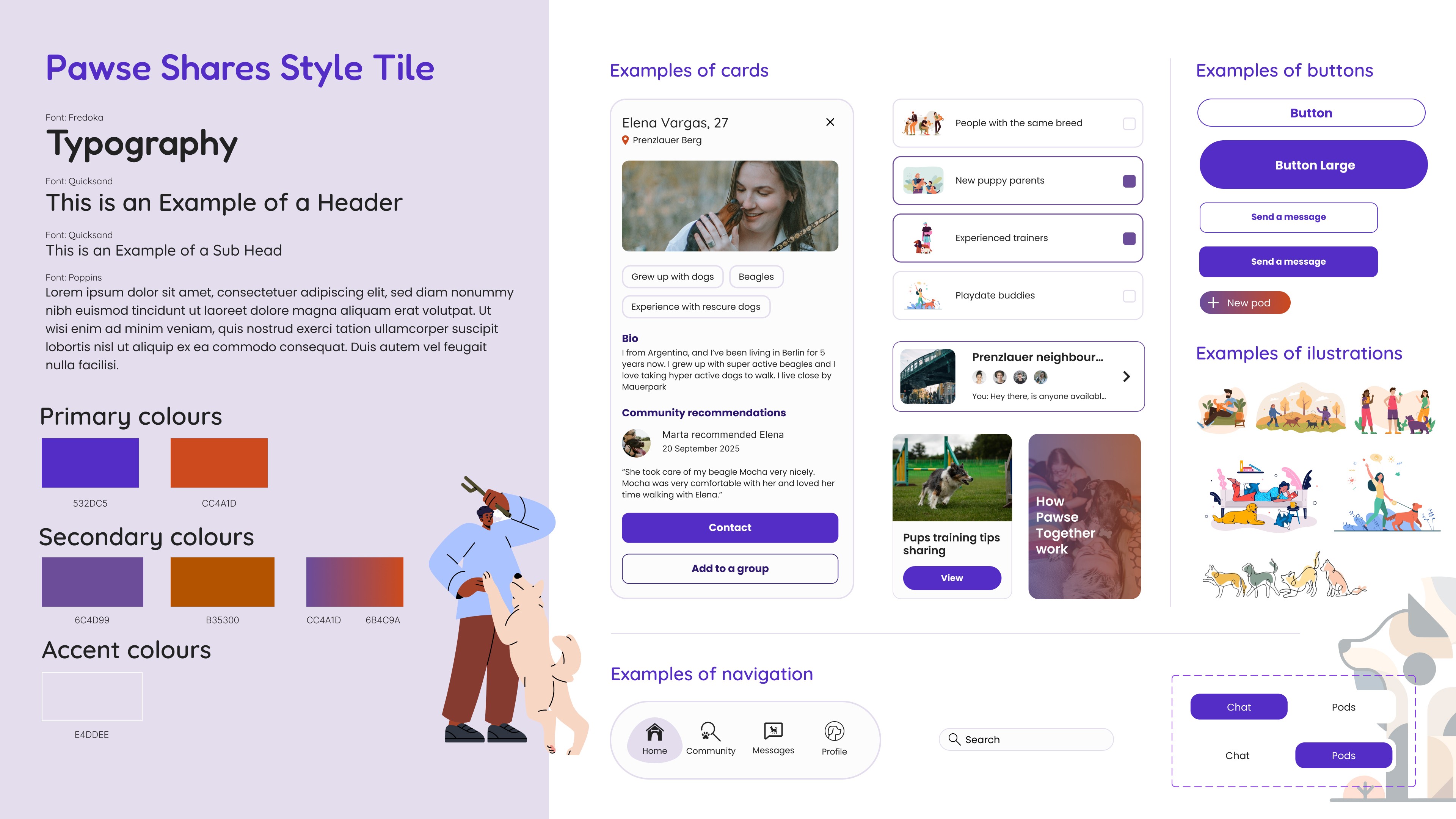
Our style tile establishes the visual identity of Pawse Together — warm, approachable, and community-driven. We chose Fredoka and Quicksand for headers to bring a rounded, friendly tone, and Poppins for body text to maintain clarity and balance.
The color palette blends purple for trust and reliability with orange for warmth and energy, softened by neutral tones for accessibility and harmony. We ensured all elements meet AA and AAA contrast standards, reinforcing inclusivity.
Playful illustrations celebrate the joy of the dog community, while consistent cards, buttons, and navigation unify the interface into a design that feels inviting, reliable, and easy to use.
Our style tile establishes the visual identity of Pawse Together — warm, approachable, and community-driven. We chose Fredoka and Quicksand for headers to bring a rounded, friendly tone, and Poppins for body text to maintain clarity and balance.
The color palette blends purple for trust and reliability with orange for warmth and energy, softened by neutral tones for accessibility and harmony. We ensured all elements meet AA and AAA contrast standards, reinforcing inclusivity.
Playful illustrations celebrate the joy of the dog community, while consistent cards, buttons, and navigation unify the interface into a design that feels inviting, reliable, and easy to use.
high fidelity prototype
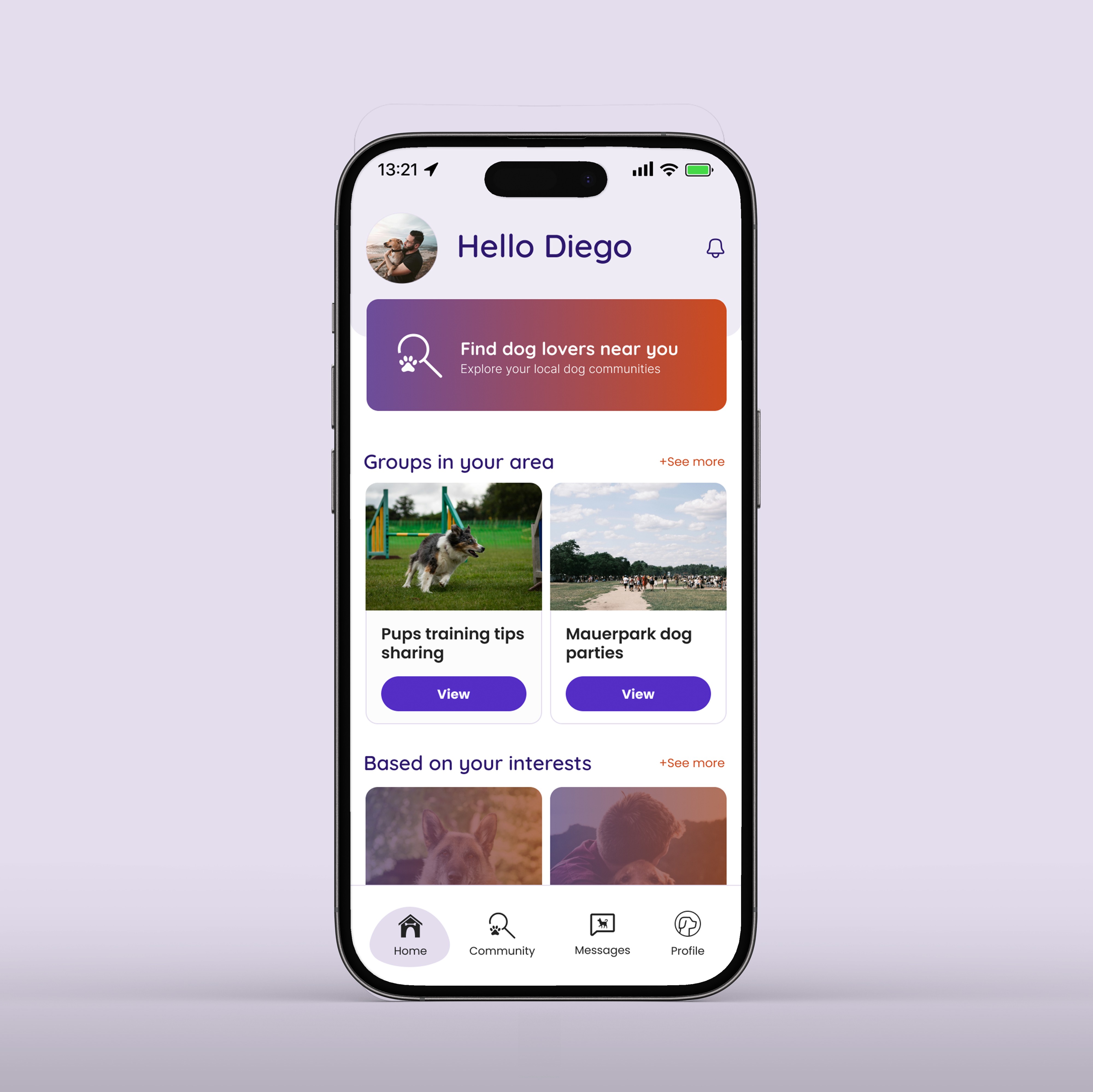
The high-fidelity prototype brought our concept — and my visual design vision — fully to life. I led the end-to-end UI design, refining the visual language, component system, and interactions to ensure every detail felt cohesive and purposeful.
The experience begins with a personalized onboarding flow, allowing users to share details about themselves and their dogs for a more tailored experience. The home page leverages AI to suggest nearby users, groups, and events, while a map view helps people connect locally in a more intuitive, visual way.
To strengthen community interaction, I designed both private chats and group “pods”, creating spaces for authentic and friendly exchanges. The interface combines warm visuals, accessible typography, and clear hierarchy to make navigation effortless.
Altogether, the final prototype captures the heart of Pawse Together — a vibrant, trustworthy, and emotionally connected community for dog lovers to share care, companionship, and joy.
The high-fidelity prototype brought our concept — and my visual design vision — fully to life. I led the end-to-end UI design, refining the visual language, component system, and interactions to ensure every detail felt cohesive and purposeful.
The experience begins with a personalized onboarding flow, allowing users to share details about themselves and their dogs for a more tailored experience. The home page leverages AI to suggest nearby users, groups, and events, while a map view helps people connect locally in a more intuitive, visual way.
To strengthen community interaction, I designed both private chats and group “pods”, creating spaces for authentic and friendly exchanges. The interface combines warm visuals, accessible typography, and clear hierarchy to make navigation effortless.
Altogether, the final prototype captures the heart of Pawse Together — a vibrant, trustworthy, and emotionally connected community for dog lovers to share care, companionship, and joy.
Click the image to explore the prototype — it opens in a new tab on mobile for a better view.
Key learnings
Throughout this project, we learned to collaborate across diverse perspectives and turn Kristin’s original idea into a truly community-driven app. It was a shift from purely functional design to something more human and meaningful, showing us how trust and thoughtful visual design can bring empathy to digital spaces.
Next, we plan to test the prototype with users, gather feedback, refine accessibility, and run a desirability test to ensure the experience feels valuable and inclusive for everyone.
And just like the connections we hope to create through Pawse Together — this project reminded us that great design, like friendship, starts with trust. 🐾
Throughout this project, we learned to collaborate across diverse perspectives and turn Kristin’s original idea into a truly community-driven app. It was a shift from purely functional design to something more human and meaningful, showing us how trust and thoughtful visual design can bring empathy to digital spaces.
Next, we plan to test the prototype with users, gather feedback, refine accessibility, and run a desirability test to ensure the experience feels valuable and inclusive for everyone.
And just like the connections we hope to create through Pawse Together — this project reminded us that great design, like friendship, starts with trust. 🐾